-
 KAILH
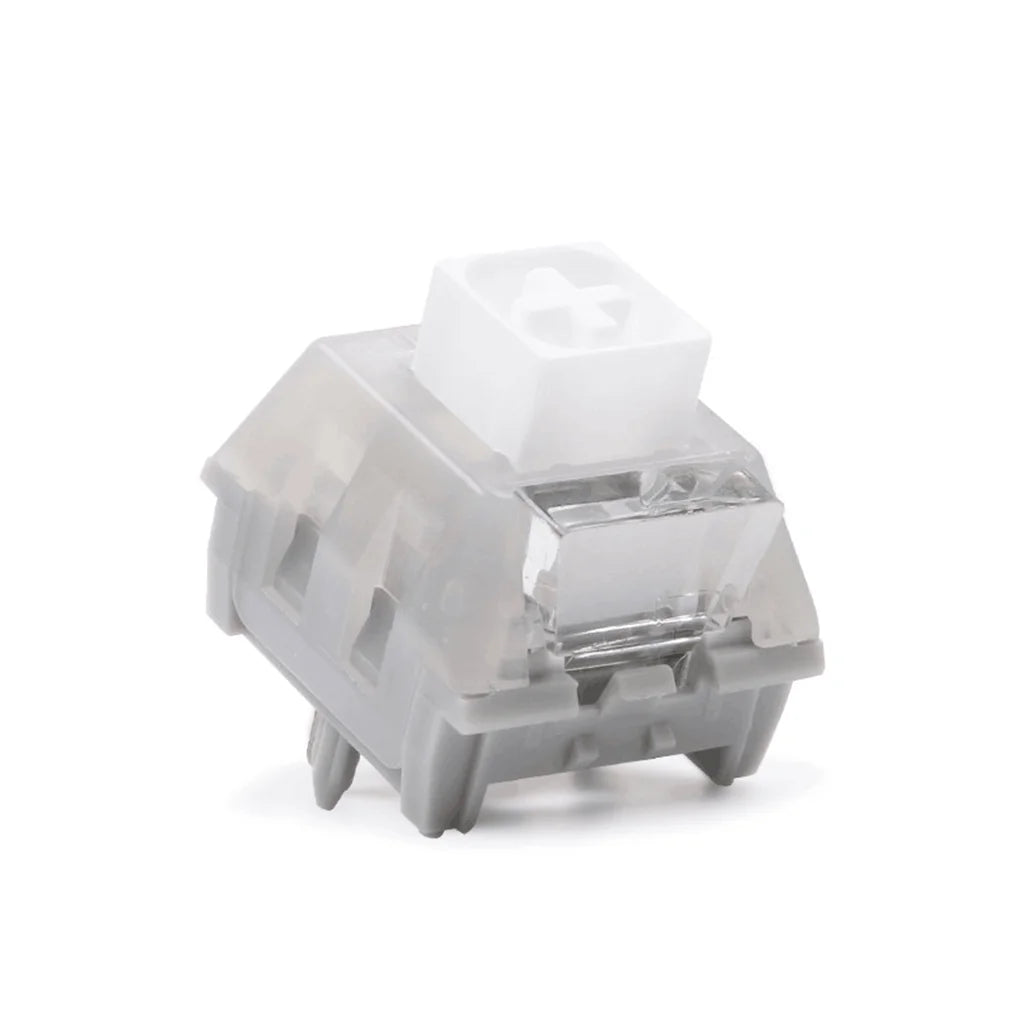
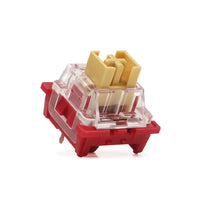
KAILHKailh White Owl V2 Switch RGB SMD Clicky 70g Powerful tactile clicky switch with crisp and audible feedback Short stroke...
From €15,99 €7,05€15,99€15,99 €7,05
Kailh (Kaihua Electronics) has achieved one of the most spectacular transformations in the modern computer industry. In less than fifteen years, this Chinese company went from being a manufacturer of "cheap clones" of Cherry MX switches to a recognized innovator, becoming the second-largest manufacturer of mechanical switches in the world with over 140 patents and partnerships with major technology brands. This metamorphosis perfectly illustrates how strategic innovation can disrupt a market dominated by a German giant established for decades.
Kailh's history demonstrates that a company can not only challenge established leaders but also completely redefine industry standards through bold vision and remarkable adaptability. Today, Kailh's BOX switches are considered the gold standard for clicky switches, while the company continues to innovate with groundbreaking technologies such as Hall effect switches and all-POM constructions.
The Humble Roots of a Future Giant
Kailh's story begins in May 1990 in Zhejiang Province, China, under the name "Longhua Electronics". Founded by an entrepreneur known as "Mike", the company initially specialized in manufacturing precision electronic components: switches, connectors, digital encoders and other components for communication equipment, portable devices and computer peripherals.
This first decade already reveals the company's innovative DNA. As early as 1995 , Longhua Electronics was developing micro-switches specifically designed for mice, achieving significant advances in terms of lifespan and tactile feedback. This early expertise in precision switch mechanics would form the technical foundation for their future dominance of the mechanical keyboard market.
In October 1998 , the company took a crucial step by relocating to Dongguan, in Guangdong Province. This strategic move to one of the largest industrial districts in South China provides privileged access to transport networks to Hong Kong and international supply chains, creating the conditions for future global expansion.
The Strategic Vision That Changed Everything
The real turning point in Kailh's history came in January 2009 , when the company, which had been renamed "Kailh Electronics" in 2005, identified an extraordinary market opportunity. The expansion of the keyboard market in 2009 created supply shortages that domestic manufacturers could not meet , primarily due to the unacceptable delivery times of traditional Cherry MX switches.
This supply crisis revealed a weakness in Cherry's dominance: their inability to meet the growing demand from the Asian market. Kailh's management immediately seized this opportunity and redirected its R&D team to research mechanical keyboard switches. This decision, which may seem obvious in retrospect, required remarkable strategic vision and considerable entrepreneurial courage to challenge a decades-old German monopoly.
In 2013 , Kailh achieved a decisive technological milestone by establishing fully automated production lines for mechanical keyboard switches. This early automation gave them a 30-40% cost advantage over traditional production methods, laying the foundation for their future cost leadership strategy.
The Era of the First Clones and Learning the Market
2014 marked Kailh's official entry into the mechanical switch market, coinciding perfectly with the expiration of key Cherry MX patents. The first Kailh switches – Red, Blue, Brown, and Black – were direct reproductions of Cherry's designs, but sold at 60% of the original price .
This first generation of switches immediately revealed the technical challenges Kailh faced. Early users described the switches as "grainy" with less precise manufacturing tolerances than Cherry MX. The Kailh Red, for example, required an actuation force of 50gf compared to 45gf for the Cherry Red, creating a slightly different feel that divided users.
However, this "learning" period allowed Kailh to establish crucial strategic partnerships , notably with Razer in 2014 for the manufacture of custom switches. This partnership with a prestigious gaming brand immediately legitimized Kailh in the Western market and demonstrated their ability to meet the quality requirements of major brands.
Revolutionary Innovations That Redefined Industry
2016 marked the beginning of Kailh's transformation from imitator to innovator with the launch of its Speed switches . These switches introduced a shorter actuation distance of 1.1 mm (compared to the standard 2 mm), specifically targeting the rapidly expanding gaming market. Even more revolutionary, Kailh offered four variants—Silver, Copper, Bronze, and Gold—providing tactile and clicky options that Cherry did not offer in its Speed line.
But it was in May 2017 that Kailh achieved its true technological revolution with the introduction of BOX switches . This innovation represents a quantum leap in the design of mechanical switches, introducing several revolutionary concepts:
The IP56 environmental protection rating is a world first, making the switches dustproof and waterproof thanks to a rectangular housing that protects the metal contacts. The "click bar" mechanism replaces the traditional "click jacket" system, producing clicks on both the downward and upward strokes, creating an unparalleled tactile feel.
These technical innovations are accompanied by substantial improvements in stability. The box-shaped design significantly reduces lateral stem play, a persistent problem with traditional MX switches. The lifespan increases to 80 million actuations compared to 70 million for standard switches, demonstrating that technical innovation goes hand in hand with improved reliability.
The Crisis That Revealed the Resilience of the Company
2018 brought Kailh its biggest reputation crisis with the " BOX stem scandal ." BOX switches featured stems measuring 1.32 mm instead of the standard 1.30 mm, causing cracks in premium keycaps that often cost over $200 a set. This seemingly minor difference of 0.02 mm caused considerable damage within the enthusiast community, with users reporting up to 75% of their keycaps damaged.
Kailh's response to this crisis reveals the company's organizational maturity. Rather than denying or downplaying the problem, Kailh immediately acknowledged the error and initiated a complete retooling process . By the fall of 2018, new, retooled BOX switches were meeting standard specifications, demonstrating a remarkable ability to react for a company of this size.
This crisis, while damaging in the short term, paradoxically enhances Kailh's reputation by demonstrating their commitment to quality and their responsiveness to community concerns - a stark contrast to Cherry's more distant approach.
International Expansion and Market Conquest
Kailh's international expansion strategy follows a methodical and well-planned progression. Phase 1 (2005-2012) established a solid foundation in Southeast Asia, Hong Kong, and Taiwan. Phase 2 (2012-2018) targeted Western markets, with significant penetration in North America through the Razer partnership and in Europe through strategic distribution agreements.
Phase 3 (2018-present) consolidates Kailh's global position with an established presence in Europe, North America, India, Russia, and the Middle East. The company now serves over 2,000 employees supporting global partnerships with giants such as Logitech , Dell, Lenovo, MSI , Gigabyte, and Ducky .
This expansion is based on substantial competitive advantages: production costs 40 to 70% lower than German competitors, faster delivery times , and customization flexibility that established manufacturers cannot match. Kailh switches cost between $0.30 and $0.50 each, compared to $0.50 to $1.00 for Cherry MX switches, creating a decisive price advantage in cost-sensitive markets.
The Evolution of Product Ranges: From Diversification to Specialization
The evolution of Kailh's product portfolio perfectly illustrates their strategic transformation. Regular switches (2014-2016) established their market presence, Speed switches (2016) demonstrated their capacity for incremental innovation, but it was the BOX switches (2017) that truly revolutionized the industry.
The Pro series combines the advantages of BOX and Speed switches, offering a compromise between shorter key travel and improved stability. Novelkeys collaborations introduce revolutionary materials like the all-POM construction with Cream switches, creating cult followings within the enthusiast community.
Recent developments reveal increasing technical sophistication. The Shadow Series switches (2024) explore low profiles with POM constructions, while the Extreme Series switches (2025) introduce new polished POM formulations with three specialized variants. The introduction of Hall effect switches (2024) with the Mistral, Flame, and Hornet models demonstrates that Kailh continues to explore uncharted technological territory.
Transforming Community Reputation
The relationship between Kailh and the mechanical keyboard community represents one of the most dramatic reputation transformations in the modern tech industry. From 2014 to 2017 , Kailh was universally regarded as a manufacturer of "cheap Cherry MX clones" of inferior quality, described as "grainy" and with "loose manufacturing tolerances."
The BOX innovation (2017-2018) initiated a radical shift in perception. Despite the stem crisis, the community recognized the technical superiority of the click bar mechanism and its environmental friendliness. The BOX Jade and BOX Navy switches quickly became favorites among enthusiasts for their unparalleled "crisp and metallic" sound.
The period from 2019 to 2025 cements Kailh's position as an innovation leader in the industry. Influential reviewers like ThereminGoat and KeebNews regularly recommend BOX switches as "the best clicky switches available." The /r/MechanicalKeyboards Reddit community has gone from skepticism to actively recommending Kailh's specialized products.
This transformation reflects a broader shift in perception: Cherry is now seen as stagnant while Kailh is pushing the industry forward with 8 to 10 new switch variants annually compared to Cherry's minimal releases.
Technological and Commercial Challenges
Despite its successes, Kailh continues to face significant challenges. The perceived quality gap persists in certain segments, with Cherry MX switches maintaining their prestige in the premium market thanks to their rating of 100 million actuations, compared to 50-80 million for Kailh.
Manufacturing consistency remains a challenge, with occasional reports of batch-to-batch variation, although this has improved considerably compared to the early years. Increased competition with the entry of new manufacturers such as Gateron , TTC, and JWK creates constant price pressure and necessitates continuous innovation.
BOX switches , despite their technical success, present limitations for the modding community due to their difficulty of disassembly and impossibility of traditional lubrication, limiting their appeal to enthusiasts who favor customization.
Current Position and Future Prospects
Today, Kailh holds the number two position worldwide with an estimated market share of between 25 and 30% of the global mechanical switch market. The company benefits from a compound annual growth rate of 15% in the mechanical keyboard market, with sustainable competitive advantages in three key areas.
Technological leadership is demonstrated by a portfolio of over 140 patents and a capacity for continuous innovation. Cost leadership is based on production automation and supply chain optimization. Market access is supported by strong OEM relationships and a global distribution network.
Expansion into automotive applications (2018) and medical equipment diversifies revenue beyond keyboards. R&D investments representing 30% of sales ensure a continuous innovation pipeline, with promising developments in advanced POM materials and magnetic technologies.
The Legacy and Impact on Industry
Kailh's story transcends that of a simple switch company to become a case study of successful industrial disruption. In fifteen years , a Chinese company not only challenged but also redefined the standards of a German industry established for decades.
The impact on industrial innovation is undeniable: IP56 environmental protection, the click bar mechanism, short-stroke switches, and POM constructions are all innovations that have forced the entire industry to evolve. Cherry itself has had to accelerate its pace of innovation in response to competitive pressure from Kailh.
The impact on accessibility is equally significant: by offering quality alternatives at affordable prices, Kailh has democratized access to mechanical keyboards for millions of users who previously could not afford premium German switches.
Kailh's transformation perfectly illustrates how strategic innovation, combined with operational excellence and customer focus, can disrupt seemingly unassailable markets . In a world where technological dominance often seems a given, Kailh's story serves as a reminder that determined innovation can still rewrite the rules of the game, transforming an unlikely challenger into a recognized leader in a rapidly evolving industry.
Building your own custom keyboard
-
97 items
-
67 items
-
70 items
-
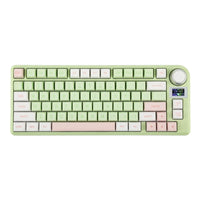
137 items
-
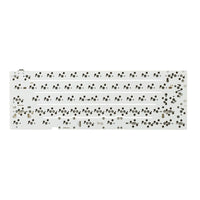
10 items
-
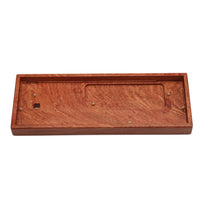
9 items
-
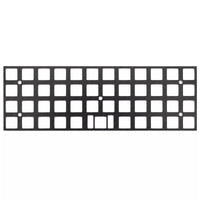
7 items
-
32 items
-
14 items
-
40 items